February – March
Maple syrup
Late winter
Tap, boil, bottle. The run starts when nights freeze and days thaw, so the date moves every year — we announce it about a week ahead.
 Catskills Experience Book the walk
 Sundown Wild Forest · Kerhonkson, NY
A 1703 mill, a trail of brass-tagged trees, free guided hikes for school groups, and workshops in maple, jewelweed, and mushroom. There's a cabin too.
What we do
We are a family running a small forest classroom in Ulster County. The cabin is the part that earns money. Everything else is why we're here.
Free historical tour
c. 1703
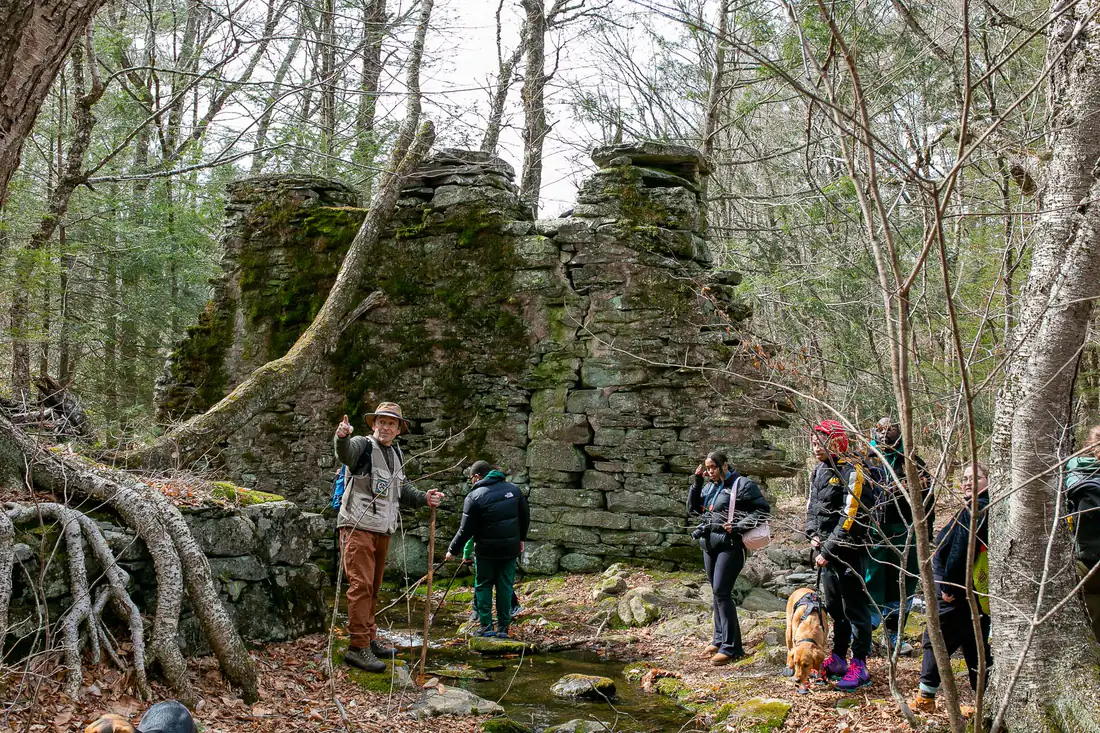
Seventy-three years before the Declaration of Independence, someone put a grist mill on this creek. The stone walls are still here, and so is the race that fed them. We walk you through what a colonial mill town was, why it grew where the water fell, and how it disappeared back into forest.
It takes about an hour, it costs nothing, and it is the single best argument we know that history is a physical thing you can stand in.
Free guided hikes
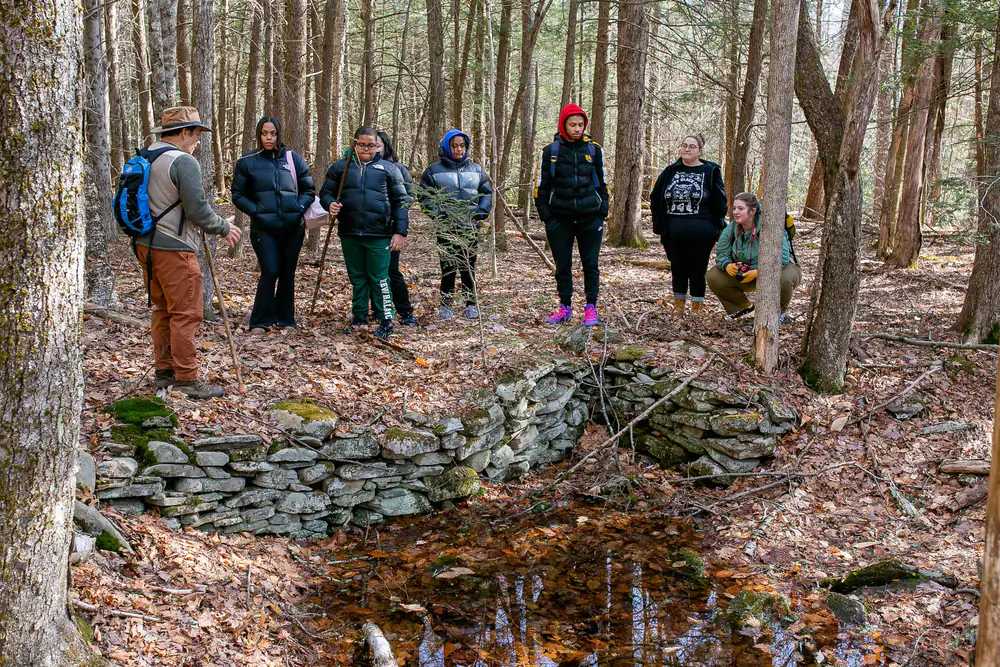
A naturalist's walk rather than a fitness hike. We stop constantly — at tracks, at scat, at a hemlock dying of adelgid, at whatever is fruiting. Kids turn out to be the best spotters on the trail, so we let them lead and explain what they have found.
Free, always, for school-aged groups. Led by the trail's official NY DEC forest steward.
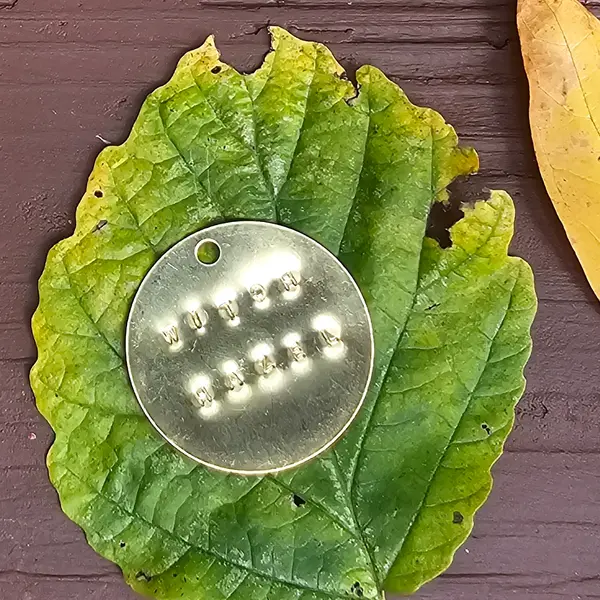
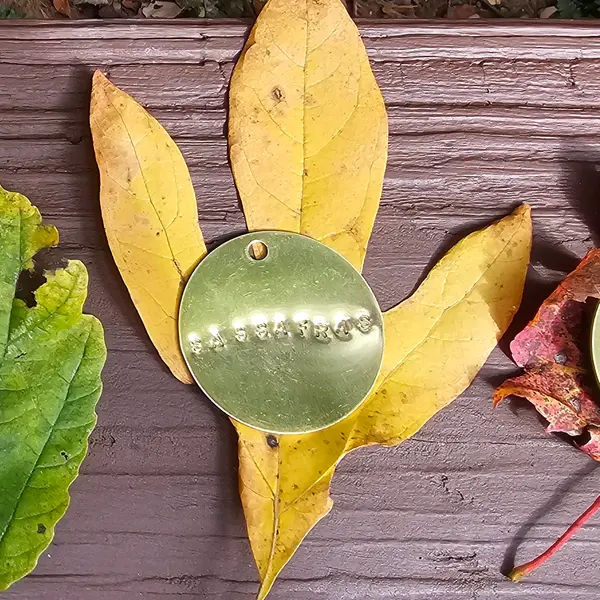
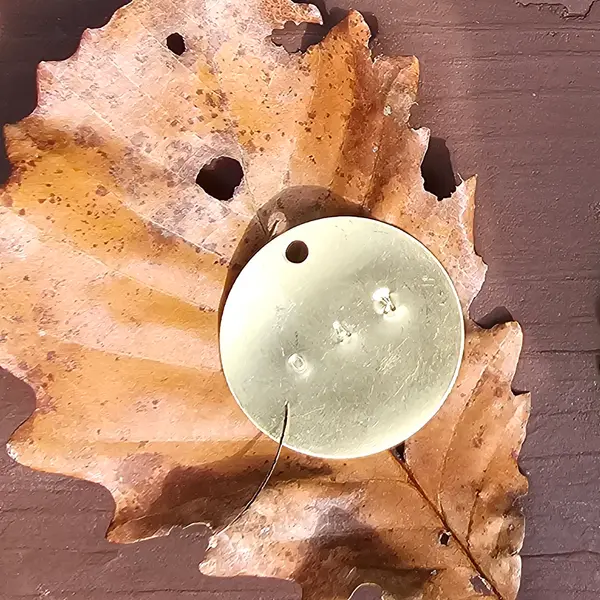
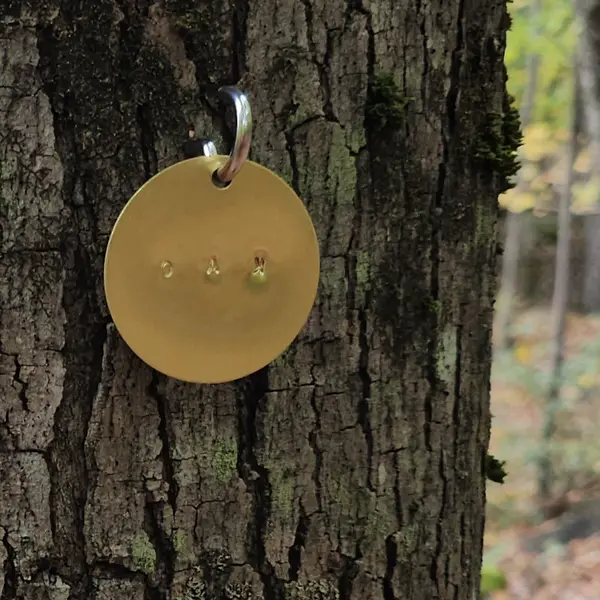
Tagged trees
Workshops
Every workshop we run is set by the plant, not by us. This is the order the forest hands things over. Free or low cost, and you take home whatever you make.
February – March
Late winter
Tap, boil, bottle. The run starts when nights freeze and days thaw, so the date moves every year — we announce it about a week ahead.
June – August
High summer
Cut the plant, render the salve, take home your jar. Jewelweed grows where poison ivy grows, which is the reason it works.
September – October
Early fall
Identify, dry, grind, steep. Reishi and turkey tail come off the dead hemlocks after the first cool rains.
October – November
Late fall
Cut and steep the bark after the leaves drop, when the shrub is flowering and nothing else is. Bottled, it keeps a year.
Afterschool
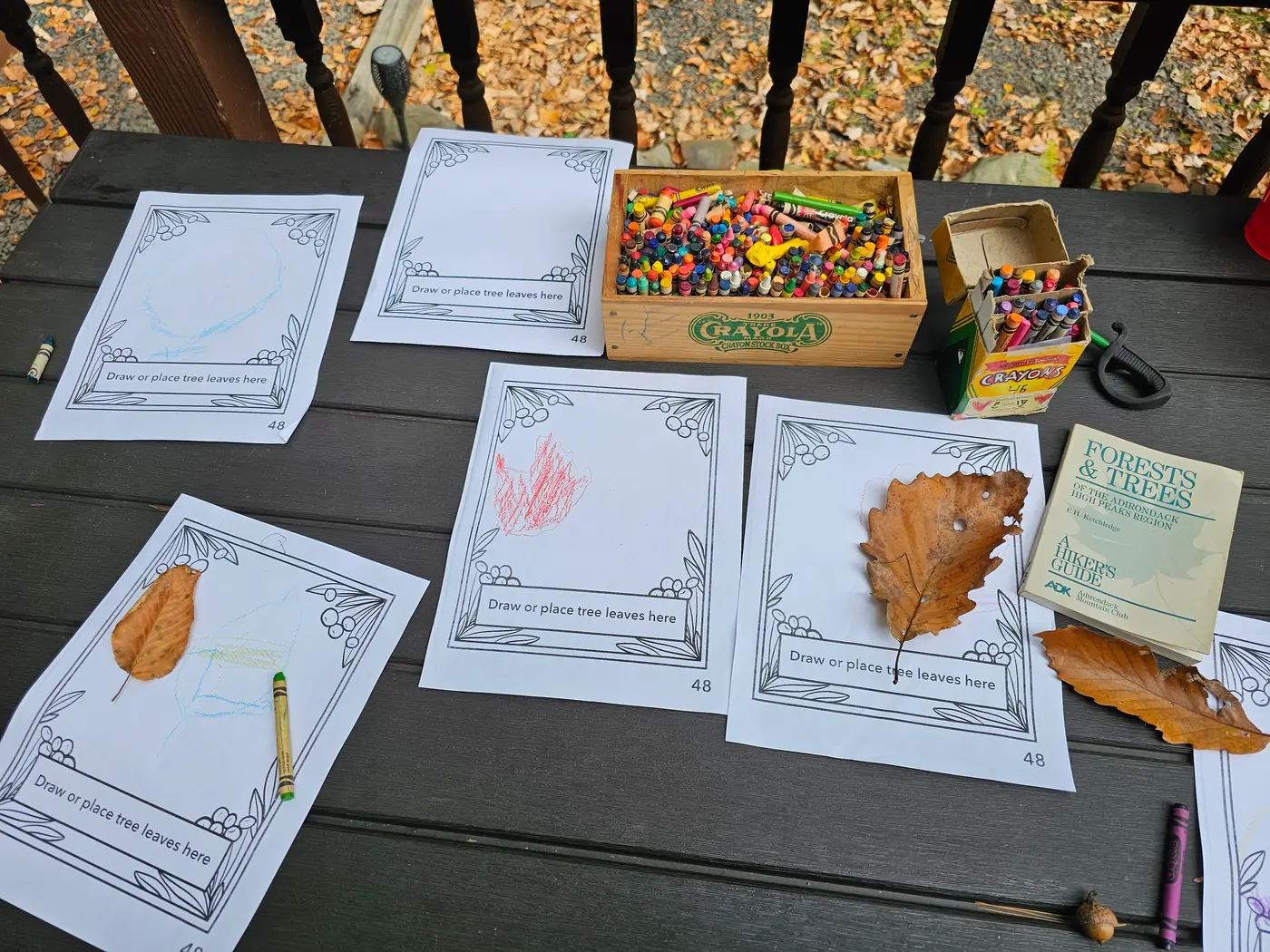
These two are usually treated as opposites. Out here they are the same subject: you need instruments to see a forest properly, and you need a forest to make the instruments worth building.
For schools & groups
Most of what we run is arranged directly with a teacher, a scout leader, or a homeschool group — you tell us roughly when, and we find a date that suits the weather and the season. Groups of up to about twenty work best. Everything is led by the trail's official NY DEC forest steward.
Tell us the age range and rough group size and we'll come back with what we can do and what to bring.
The cabin
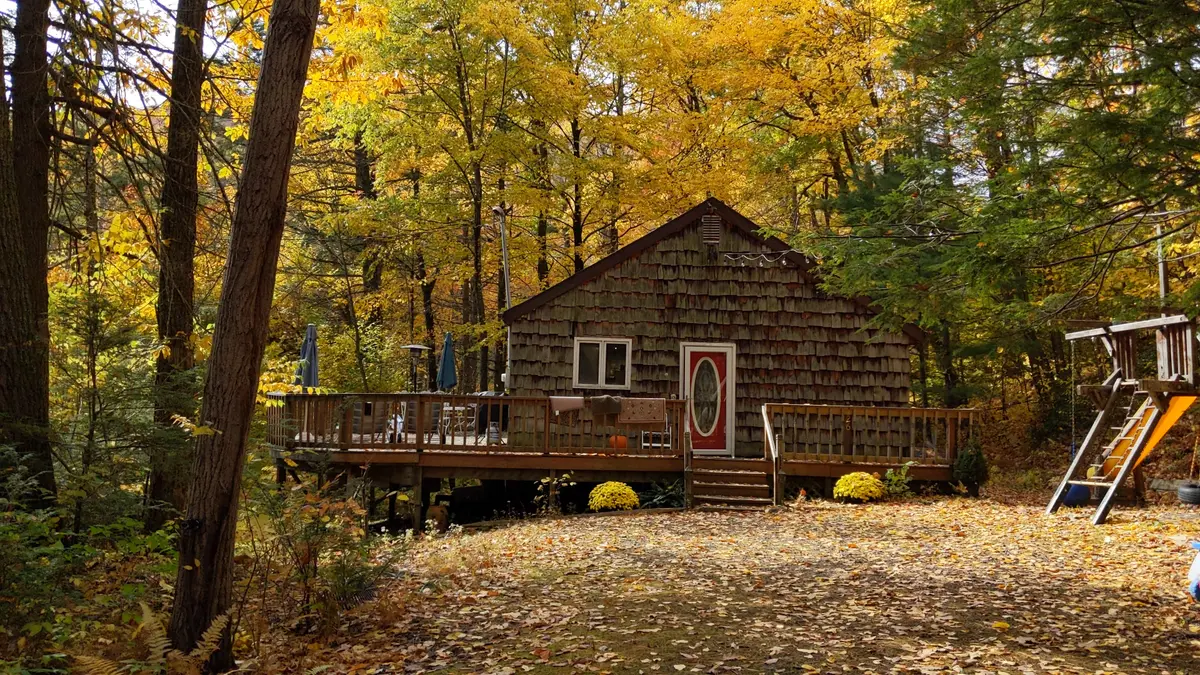
There is a hand-shingled cabin here with a red door, a wood stove, and a wide deck over the ferns. People rent it, and that income is what lets us run the tours, the hikes, and most of the workshops at no charge.
So if you have enjoyed the trail: staying a night is the most direct way to keep it going.
Guest reviews
★★★★★It is a perfect quiet place to escape the city buzz and unplug from busy schedules.
★★★★★Great, peaceful little getaway where you can hear the stream from the house and birds chirping constantly.
Read all 178 reviews on Airbnb →★★★★★We loved Scott's home. My one-year-old was jumping with excitement as soon as we pulled up and she saw the playground and all the fun toys.